
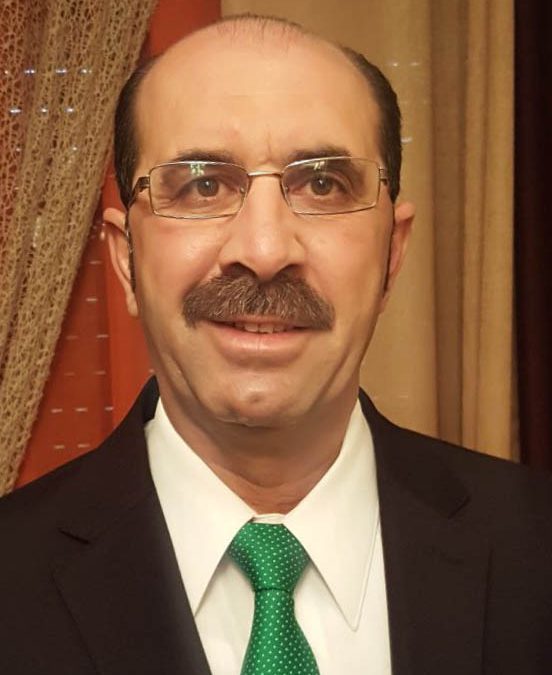
D. Omar Rahal
Freedom of press, opinion and expression are considered of the most significant fundamentals for strengthening basic rights & freedoms. While other rights are deeply connected with it since press freedom is the first step to guarantee enjoying other rights. It is the mirror for public rights & freedoms and the oxygen of democracy[1]. In other words, it is one of the central tools through which citizens can express him/her opinion, get involved in decision-making and express the democratic citizenship. Furthermore, press freedom represents a standard to measure the democracy of the political system, it contributes to enhancing basics for the state of law, and it is a genuine measurement which reflects the availability of a political will to guarantee public freedoms in line with international standards for human rights. Freedom of press, opinion & expression and the right to access information are essential elements to move towards modern community.
Also, it is a basic human rights and a dynamic part of the democratic system. It gives space for citizens to exchange information & ideas, to protest against grievances to influence the public speech, and criticize the government for its actions.
Hence, freedom of expression & press represent indispensable condition for the civil political participation. Besides, freedom of press, opinion & expression are the bases for all liberties and enable citizens to enjoy the liberty based on fulfilling self-actualization in addition to expression according to thinking, imagination, creativity and the attentive conscience. Moreover, freedom of opinion, press & expression contribute to achieving good governance and strengthening its basics in terms of transparency, accountability and oversight. And to enhancing values of tolerance, equality, and dialogue in the community which are only guaranteed within the freedom of opinion, press & expression.
At the international level, diverse conventions and treaties guarantee the right to express the opinion freely, and the freedom of press work, in addition to reinforce its foundations. Universal declaration of Human Rights is the first international document addressed this right in article (19) “Everyone has the right to freedom of opinion and expression; this right includes freedom to hold opinions without interference and to seek, receive and impart information and ideas through any media and regardless of frontiers”[2].
Followed by the International Covenant on Civil and Political Rights of 1966, especially article (19), the second paragraph” Everyone shall have the right to freedom of expression; this right shall include freedom to seek, receive and impart information and ideas of all kinds, regard less of frontiers, either orally, in writing or in print, in the form of art, or through any other media of his choice”[3].
Then UNESCO Declaration of 1978 was issued on Fundamental Principles concerning the Contribution of the Mass Media to Strengthening Peace and International Understanding, to the Promotion of Human Rights and to Countering Racialism, apartheid and incitement to war”. Especially article (2)” The exercise of freedom of opinion, expression and information, recognized as an integral part of human rights and fundamental freedoms, is a vital factor in the strengthening of peace and international understanding”.
Additionally, the Arab Charter on Human Rights, in article (32) paragraph 1 stipulates” The present Charter shall ensure the right to information, freedom of opinion and freedom of expression, freedom to seek, receive and impart information by all means, regardless of frontiers”.
At the national level, Palestinian legislations address the press freedom in the amended Palestinian Basic Law of 2003 in article (19) “Freedom of opinion may not be prejudiced. Every person shall have the right to express his opinion and to circulate it orally, in writing or in any form of expression or art, with due consideration to the provisions of the law”. also, article (27) “
- Establishment of newspapers and all media means is a right for all, guaranteed by this Basic Law. Their financing resources shall be subject to the scrutiny of the law.
- Freedom of audio, visual, and written media, as well as freedom to print, publish, distribute and transmit, together with the freedom of individuals working in this field, shall be guaranteed by this Basic Law and other related laws.
- Censorship of the media shall be prohibited. No warning, suspension, confiscation, cancellation or restriction shall be imposed upon the media except by law, and pursuant to a judicial ruling”.
The Palestinian legislator penalizes anyone infringes upon the public freedoms of citizens by virtue of article (32) of the same law “Any violation of any personal freedom, of the sanctity of the private life of human beings, or of any of the rights or liberties that have been guaranteed by law or by this Basic Law shall be considered a crime. Criminal and civil cases resulting from such violations may not be subject to any statute of limitations. The National Authority shall guarantee a fair remedy to those who suffer from such damage.
In reference to Palestinian Press & Publications Law of 1995, paragraph (c) of article 4 stipulated the right of journalists “to look for information, news and statistics which may concern the citizens from its different sources, analyzing it, deliberating it, publishing it and commenting on it according to law”. [4]
It is worth noting that the world celebrates the Press Freedom Day on May 3rd while the status of Palestinian legislations about press has no change, and the Palestinian press conditions are in trouble. Based on the reports of the Palestinian Syndicate of Journalists &human rights organizations, violations to the Palestinian journalists have never stopped. In terms of detention, threat, terrifying, and confiscation of tools, batting, reprehension, assault, breaking the devices & cameras with obvious abuse against any attempt to monitor violations to the citizens, particularly during peaceful assembly and marches.
The previously mentioned come in the context of the breaches against journalists in the absence of legislation to regulate press work and to protection of journalists. Especially with significant changes occurred last years due to the extension of Internet space and social networking, and the significant increase in the number of electronic press websites.
In different occasion, the president Mahmoud Abbas mentioned that freedom of opinion, press and expression have no limits in Palestine however, the status quo indicates that freedom challenge impediments. Since the Palestinian journalists are suffering from deteriorating circumstances. On April 17th, social media activists generalized the news of arresting the journalist Hazem Naser, who works in montage at An-najah Broadcasting Channel by the preventive security entity in Tulkarm without knowing the reasons. Moreover, the journalist Rami Samara, who works at Palestine News Agency WAFA and the caster at Ajyal local radio, was arrested for 24 hours on April 3rd 2018 after appearance before the Office of the Public Prosecutor. Following a communication submitted by the director of Media Center for An-najah National University the journalist Ghazi Murtaja who accused the journalist Rami Samara of insulting him after the dismissal of six journalists from the center. Because of generalizing (Hasghtags) on their personal Facebook pages concerning the explosion of the Prime Minister’s parade, Dr. Rami Hamdallah in Gaza Strip. The journalist Samar was released after a personal interference from the president in the office of the Public Prosecutor. Also, the Journalist Naela Khalil was recalled to appear before the office of the Public Prosecutor regarding the same case.
In the same context, Wataniya Mobile Company submitted a complaint in the office of Public Prosecutor against the Chairman of Alhadath weekly newspaper Sami Sarhan, the Chief Editor Rula Sarhan, and the Director General Tareq Amr. After publishing an investigative report by the newspaper on the losses of Wataniya Mobile Company and lack of transparency in publishing financial statements to its shareholders[5].
In the past few months, it has not been better. Palestinian intelligence has arrested the schemer for the program of “Zionist scene” in Al-Quds Channel, Imad Mahmoud Hammad (34 years old) for three days. While the Court of Peace in Nablus, has also transferred the correspondent At Alaqsa Channel, Tareq Abdel Razeq Abu Zaid, 43, to the Criminal Court. In relation to a case on statement of rights he took by one of those arrested by the PA two years ago, upon which he was arrested for 37 days. Furthermore, a force of the Palestinian Criminal Investigation broke through the House of journalist Yousef Nassar, a broadcaster at the Naqab radio in the town of Dora, near Hebron and looked for him aiming to arrest but he was not at home. Besides, the Palestinian Intelligence Service arrested the editor and correspondent of the Jerusalem News network in Hebron, Musaab Abdel Hamid Tamimi (27 years). The preventive security service also arrested Osama Hussein Shahin, 36, a correspondent for the Palestinian Prisoners ‘ Centre.
As well, the Palestinian government has endorsed Cybercrimes Law no. 16 of 2017 on April 17th of 2018 which has resulted in legal and social argument in the Palestinian territories. Since the law doesn’t conform to the Palestinian constitution, and breaches article (19) of the Palestinian Basic Law, pertaining to freedom of opinion & expression. Also, it breaches article (27) related to media freedoms. Furthermore, it infringes upon the individual privacy. So, the UN Special Rapporteur of the Freedom of Opinion and Expression called the PA to respond to the protests concerning the endorsement of the law. As well, Amnesty International has obviously stated that Cybercrimes Law breaches international customs especially those related to International conventions that Palestine has signed in 2014.
The law in its current status is developed to match the purposes of the executive power to control its opponents, while it infringes upon the private life, expands the scope of criminalization and blocks some websites[6]. Some Palestinian human rights consider that the some of the law’s provision are contradicting with international standards. While there are big and mystifying terms which contribute to expanding the scope of criminalization and restrict the freedom of opinion, expression and press[7].
It is worth noting that in the period between 15-21/6/2017 Palestinian National Authority PNA has blocked 29 websites close to Hamas, Jihad Islami and Mohammed Dahlan[8] the PLC member.
To conclude, it is important to provide a larger scope of transparency and free deliberation of information in order to give space for the journalists to practice their work. Since the membership in the Palestinian Syndicate of Journalists isn’t sufficient as an umbrella for press work, and it is necessary to provide journalists with legal protection. Following the 27 years of issuing Windhoek Declaration in Namibia of 1991, upon which May 3rd has been selected to celebrate World Press Freedom Day. Palestinian press has to move a long way ahead to fulfill the objectives of this declaration. In terms of securing a free independent media space as a condition for press freedom, assuring the safety of journalists while practicing their work and guaranteeing a transparent investigation in the crimes of breaching press freedom.
References
- Isam Abdeen, a legal analytical paper on: violations against freedom of opinion, expression and media freedoms in the Palestinian territories, (Ramallah: Alhaqq organization, 2012). Page 6.
- Universal Declaration of Human Rights, 1948.
- International Covenant on Civil and Political Rights, 1966.
- The amended Palestinian Basic Law, 2003.
- Alhadath newspaper, Syndicate of Palestinian Journalists and their media freedoms are on the line, the edition’s file, Wednesday 18/4/2018, page 2.
- A legal memo submitted to the president Mahmoud Abbas, by the Palestinian Syndicate of Journalists & ICHR, on 12/7/2017.
- For more details look /at the Palestinian Center for Human Rights, reviewing the Palestinian Cybercrimes Law of 2017 in light of international standards for freedom of expression. 2017.
- A statement issued by ICHR, requesting the Palestinian Minister of Communication and Information Technology to intervene to cancel the right to block some websites, 20/6/2017.
[1] Dr.Isam Abdeen, a legal analytical paper on: violations against freedom of opinion, expression and media freedoms in the Palestinian territories, (Ramallah: Alhaqq organization, 2012). Page 6.
[2] Universal Declaration of Human Rights, 1948.
[3] International Covenant on Civil and Political Rights, 1966.
[4] The amended Palestinian Basic Law, 2003.
[5] Alhadath newspaper, Syndicate of Palestinian Journalists and their media freedoms are on the line, the edition’s file, Wednesday 18/4/2018, page 2.
[6] A legal memo submitted to the president Mahmoud Abbas, by the Palestinian Syndicate of Journalists & ICHR, on 12/7/2017.
[7] For more details look /at the Palestinian Center for Human Rights, reviewing the Palestinian Cybercrimes Law of 2017 in light of international standards for freedom of expression. 2017.
[8] A statement issued by ICHR, requesting the Palestinian Minister of Communication and Information Technology to intervene to cancel the right to block some websites, 20/6/2017.